How to store panettone and similar bakes: techniques and tips for increasing shelf life
In-depth29 October 2025
Panettone, Pandoro, and Colomba are at the pinnacle of Italian festive highly leavened breads, flavoursome creations that captivate the palate during the holiday season, but also pose complex and fascinating technological challenges. Their preservation, in particular, is critical for both artisans and the food industry at large. Maintaining their softness, aroma, and freshness over time is the result of a delicate balance between ingredients, production processes, and packaging.
This article, like all the others in the series on preservation, is written in collaboration with Alessio Busi, an established food technologist who has constantly worked to improve the sector’s knowledge through consultancy and theoretical and practical manuals created with his father, Omar Busi.
An important premise: what is the shelf life of highly leavened products?
“Shelf life” essentially refers to the length of time a product can remain on sale. When discussing the shelf life of a highly leavened product (such as panettone or pandoro), the topic must always be approached from two very distinct perspectives: microbiological and sensorial.
From a microbiological standpoint shelf life, is essentially linked to the risk of mould growth: it determines the hygienic safety of the product. When this component is lost, the product shows visible signs of deterioration (stains, unpleasant odours, colour changes, evident mould growth) that make it unfit for consumption.
From a sensory perspective, shelf life is primarily linked to a product going stale, a set of purely physical changes that degrade its perceived quality: loss of softness, increased crumbliness, reduced aroma, and a dry sensation on the palate. These phenomena are closely linked to the retrogradation of the starch and the resulting loss of moisture in the crumb.
These are two conditions that are independent of each other. A panettone can still be safe to eat, but already stale and dry on the palate, or vice versa.
For this reason, talking about conservation in highly leavened products means working on two different fronts:
- On the one hand, prevent microbial development through the management of the sourdough starter and attention to packaging and storage conditions
- On the other, delay staling through a well-balanced formulation, correct processing and possibly the use of processing aids or additives.
Let’s now delve into all the aspects that need to be addressed to improve the shelf life of a highly leavened product, both from a microbiological and sensorial point of view.
The role of the sourdough starter
The sourdough starter is at the heart of highly leavened special occasion products. Besides ensuring their development and structure, it plays a key role in the microbiological and sensory stability of the finished product.
During fermentation, the lactobacilli in the sourdough starter produce organic acids (especially lactic acid and acetic acid) that lower the pH of the dough, limiting the growth of unwanted microorganisms such as mould and contaminating bacteria.
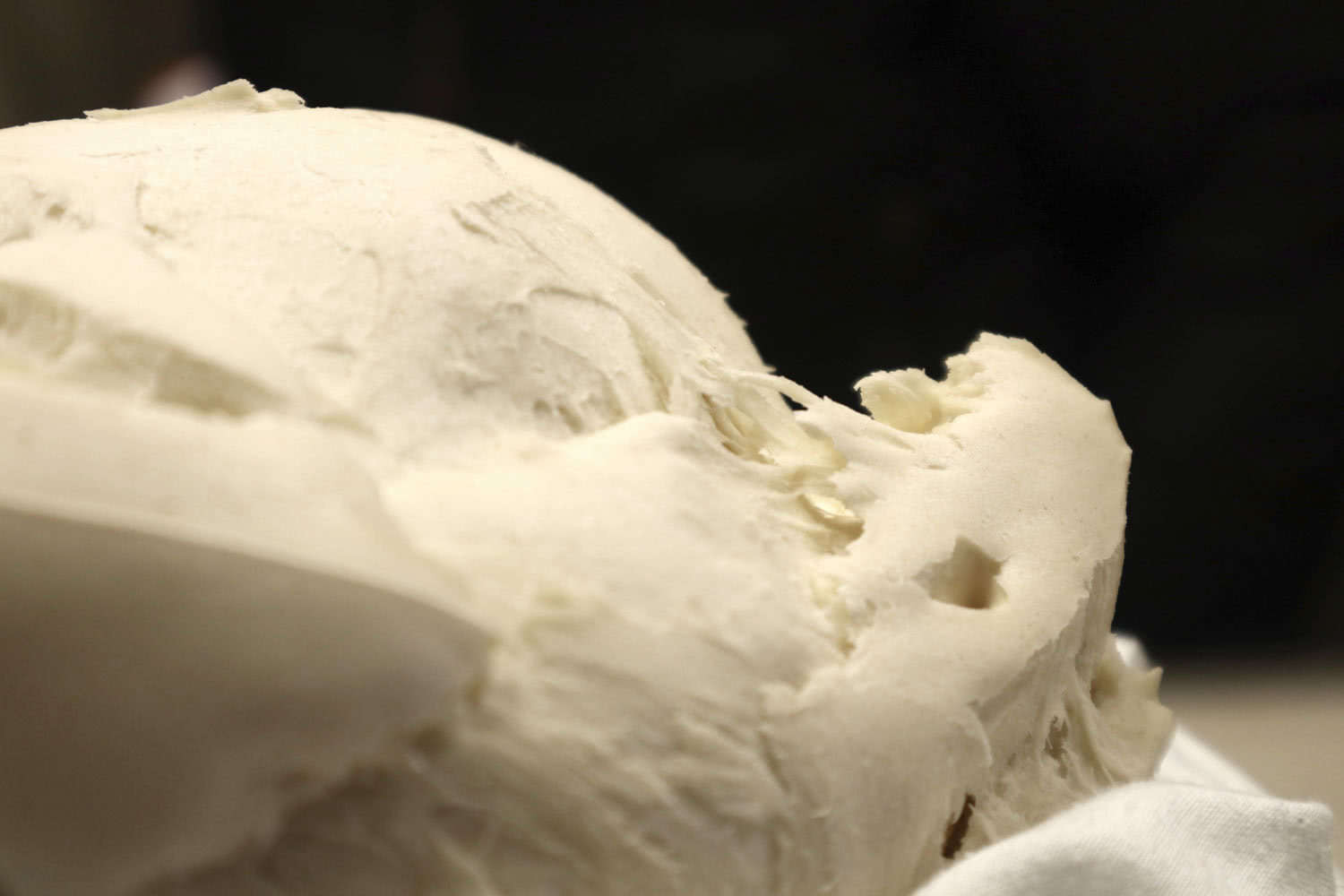
Furthermore, some strains of lactic acid bacteria produce exopolysaccharides (EPS), natural substances capable of binding water to the dough. This helps the dough to retain moisture longer, slowing down drying out process and improving the sensory shelf life of the finished product.
A mature and well-managed sourdough starter helps a balanced fermentation, which has direct benefits for shelf life, aroma, and texture. However, excessive acidity can alter the structure of the gluten mesh and result in a less fluffy product: as always, balance is essential.
The role of the recipe
The panettone and pandoro’s recipes profoundly influence their conservation.
Sugars help reduce water activity (aw), creating a less favourable environment for microbial growth. In particular, honey, glucose syrups, inverted sugar syrups and more generally all simple sugars, have a greater water-binding capacity than sucrose and are therefore more effective in increasing shelf life. It is, however, important not to overdo it. In general, it’s recommended that the total amount of simple sugars present in the recipe should not exceed 10% of the weight of the flour. An excess of simple sugars can make the dough sticky and difficult to work.
Furthermore, sugars, in combination with fats, slow down the retrogradation of starches, reducing the rate of staling and therefore keeping the product softer for longer.
In short: a well-balanced recipe not only improves flavour and structure, but is the basis for a longer shelf life.
The role of the flour
It’s important not to underestimate the role of a quality flour. Flour is the structural element that supports the entire balance of the product and plays a key role in the product’s sensory shelf life. It often provides the answer to the question, “How can I keep my panettone soft?”.
We can subdivide the contribution of flour into three points:
- The quality of the gluten
Very strong flours aren’t strictly necessary, but those that form a stable and extensible gluten net—strong but not rigid—are preferable. This type of gluten allows the dough to retain fermentation gases without collapsing and, above all, to withstand the long proofing times and the high fat and sugar content typical of panettone and pandoro. A stable gluten net also limits moisture loss during storage, slowing down the process of staling and delaying the sensation of dryness in the crumb.
- The behaviour of the starch
All flours contain a fraction of damaged starch, an inevitable consequence of the milling process, which literally “breaks” some granules. Flour with an excess of damaged starch (often the result of overly aggressive milling) tends to absorb a lot of water initially, even during kneading, but releases it rapidly after baking, accelerating the product’s staleness. It is therefore essential to choose flours with the right balance between intact and damaged starch, ensuring good liquid absorption and, in the long run, a more stable crumb.
- Enzymatic activity
The enzymatic activity of flours, particularly amylase, must be monitored. Mills monitor it through the falling number test: excessively high enzymatic activity (low falling number) can make the dough sticky and unstable, while too low an activity (high falling number) makes the dough less elastic and slows fermentation.
In short: a balanced flour is the basis for obtaining a stable dough and a product that maintains its structure and softness over time.

The role of the production method
Apart from the ingredients, the production process is also crucial. Overworked dough, uncontrolled fermentation times, or incorrect temperature management can compromise the product’s structure and promote premature aging. In general, there are two fundamental aspects to monitor to ensure a stable and long-lasting highly leavened product:
Forming good gluten (and preserving it throughout the process)
Gluten is the supporting structure, the thing that holds the entire dough together. Therefore, it’s essential to properly manage the kneading process, creating a strong, elastic, and stable gluten net. Always pay attention to two aspects:
- The temperature of the dough must never exceed 28 °C: beyond this threshold the risk of weakening the gluten increases significantly.
- Add the ingredients gradually, only when the dough is well formed. Adding them too quickly can compromise the structure and break up the previously formed gluten net, which is very difficult to recover.

Identifying the right proof
It is essential to identify the right level of proofing in both the first and second mixing of the dough.
- An under- proofed dough develops less, is more compact and tends to age more quickly
- An over-proofed dough, on the other hand, tends to acidify and lose structure, resulting in an excessive release of water during cooking, which translates into a shorter shelf life.
Ultimately, the production method is what allows us to transform a good recipe into a well balanced, stable product that maintains its quality over time.
Production environment management is also crucial: sanitizing surfaces and workers’ hands reduces the risk of post-baking cross-contamination, which can, in time, results in visible mould on the packaged product.
The role of the baking
Baking is a crucial step for safety and shelf life.
Insufficient baking can leave excess moisture in the product, which encourages microbial growth and the activity of potentially harmful enzymes, which can accelerate processes such as the fat becoming rancid. Conversely, prolonged baking dries out the product excessively, irreparably shortening its shelf life.
The ideal baking temperature should be measured at the core of the product and generally varies between 92 °C and 96 °C, depending on the recipe and the type of product.
Recipes rich in sugars, fats, and water require higher temperatures to stabilize and the type of cake also influences the choice of temperature. For example, pandoro requires a slightly higher core baking temperature than panettone, as it cannot be cooled upside down and therefore needs to achieve greater stability in the oven.
The role of packing and packaging materials
Once baked and cooled, panettone, pandoro, and colomba must be protected from oxygen and humidity. The packaging is therefore a real technological barrier, simultaneously preventing air from entering from the outside and moisture from escaping from the inside.
The most commonly used packaging material is what was once known as “Moplefan,” has now, almost universally, been replaced by high-barrier multilayer polypropylene (PP) film, which ensures long-lasting softness and fragrance. A very popular alternative is the use of heat-sealed bags, which ensure an airtight seal and a high level of protection from external agents. This solution is especially used in combination with modified atmosphere packaging (MAP), where oxygen is replaced by inert gases such as nitrogen or carbon dioxide, which slow down the oxidation of fats and the growth of mould (strictly aerobic microorganisms that require oxygen to proliferate).
Another crucial factor is the moment of packaging. The product should be sealed only when its internal temperature has dropped to below 30 °C, to avoid condensation inside the bags and an exponential increase in mould growth.

The role of the storage
After packaging, storage must ensure constant environmental conditions. A constant room temperature of 18-22 °C, without sudden changes in temperature, is ideal.
Lower temperatures, even refrigeration (<8 °C), accelerate the retrogradation of starches, thus promoting the main aging process of the product. Higher temperatures encourage microbial proliferation, exposing the product to the development of unwanted mould.
Temperature fluctuations should always be avoided because they cause condensation inside the bags, ideal conditions for mould growth. Light, which encourages the oxidative processes which make fats go rancid, also accelerates the degradation of the product’s quality. For this reason, some packages use opaque films or even secondary boxes to protect the product fully.
Additives and processing aids
When the required shelf life is long (even over 4 weeks), additives or technological processing aids can be used, with balance and awareness.
The difference between the two is legally defined by Regulation (EC) No. 1333/2008 (food additives) and Regulation (EC) No. 1332/2008 (food enzymes and processing aids).
In short, additives are substances with a recognized technological function, present in the finished product (e.g. preservatives or antioxidants), while processing aids act during the production process and do not remain in the final product (e.g. enzymes, which are destroyed by baking).
Among the most commonly used additives in large leavened products we find:
- Emulsifiers (e.g. fatty acid mono- glycerides and di-glycerides), which improve softness and resistance to staling.
- Antioxidants (e.g. ascorbic acid, tocopherols), which slow down the oxidation of fats and rancidity.
- Preservatives (e.g. potassium sorbate), which limit the growth of unwanted mould.
In the last few years, “clean label” processing aids have become increasingly popular. These are carefully selected and balanced enzyme mixes designed to extend the shelf life of highly leavened products without the use of additives that must be declared on the label. One example is the so-called “debranching” amylases, enzymes that target the branched fractions of starch, delaying recrystallization and retrogradation. This slows product staling and significantly extends shelf life.
In conclusion
Preserving highly leavened breads is a multifaceted and multidisciplinary challenge, requiring technical expertise and attention to detail. Every step, from managing the sourdough starter to choosing the right packaging, contributes to preserving the final result: a soft and fragrant product that is safe for the consumer.
A scientific approach to baking and pâtisserie allows for the optimization of a natural and sustainable shelf life, the enhancement of the quality of raw materials and the work of both the artisan and the food industry at large.
Alessio Busi